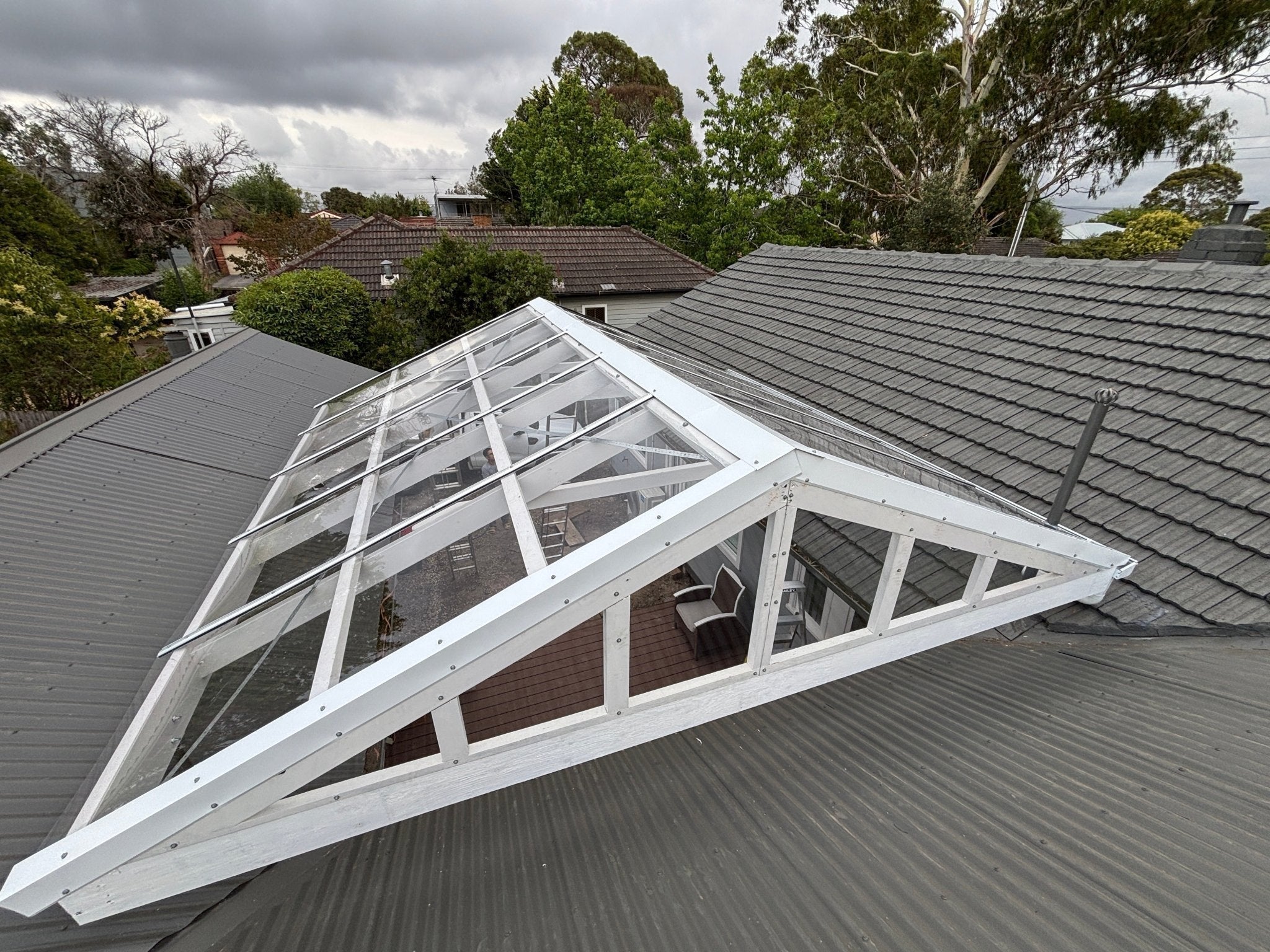

Back in 2001, we installed a pergola in Wantirna, Melbourne, using our polycarbonate multiwall roofing system. Fast forward 25 years, and it’s still performing exactly as it should.


 No patch jobs. No repairs. No compromises.
✅ No holes
✅ No leaks
✅ No issues
✅ Structure and roof still in perfect condition
After decades of harsh sun, heavy rain, strong winds, and classic Melbourne weather, this pergola stands as real-world proof that quality materials + proper system design + correct installation make all the difference.
Why This Multiwall System Outperforms Standard Twinwall Sheets
Many pergolas today use standard twinwall polycarbonate sheets. While they can be cost-effective upfront, long-term performance often tells a very different story.
Here’s how our advanced multiwall roofing system compares.
1️⃣ More Walls = More Strength (No Sagging Over Time)
Standard Twinwall Sheets:
• Typically have fewer internal walls
• Less structural support across spans
• Can sag over time, especially in wider rafter spacing or high-heat conditions

Our Multiwall System:
• More internal walls for superior load distribution
• Significantly more rigid and stable
• Designed to maintain shape and strength long-term
• No visible sagging, even after decades
This extra internal structure is one of the key reasons the 2001 pergola still looks and performs like new.
2️⃣ Standing Edge & Snap-Fit System = Easier Installation + Better Waterproofing
Standard Twinwall Installation:
• Often relies on surface fixings
• Requires drilling holes through sheets
• Higher risk of water ingress over time
• Sealants and screws can fail as materials expand and contract
Our Multiwall Roofing System:
• Standing edge design — no exposed fixings through the sheet
• Snap-fit aluminium profiles for faster, cleaner installation
• Allows natural thermal movement without stress
• Highly watertight, even after years of expansion and contraction

This system design is a major reason why, after 25 years, there are no leaks and no failures.
3️⃣ Long-Term Performance vs Short-Term Savings
While standard twinwall sheets may look similar on day one, long-term exposure tells the real story.
Twinwall Sheets (Typical Issues Over Time):
• Sagging between rafters
• Leaks around fixings
• Increased maintenance
• Shorter lifespan
Our Multiwall System:
• Designed for decades, not years
• Minimal maintenance
• Structural integrity maintained
• Proven real-world lifespan
The pergola installed in 2001 is living proof — 25 years on, still performing flawlessly.
Built for Australian Conditions
Australia’s climate is unforgiving. UV exposure, heat expansion, storms, and temperature swings quickly expose weak systems.
Our polycarbonate multiwall roofing system is engineered to:
• Handle extreme UV exposure
• Manage thermal expansion safely
• Stay watertight in heavy rain
• Maintain structural rigidity long-term
Planning a Pergola That Truly Lasts?
If you’re building polycarbonate pergola roofing or upgrading a pergola and want something that:
• Looks great
• Performs year after year
• Doesn’t sag, leak, or fail
Then choose a pergola Roof system that’s already proven itself for over 25 years.
📍 Visit our showroom to see the system in person
📞 Speak with our experts for advice tailored to your project
Because a pergola should last decades — not just a few seasons.