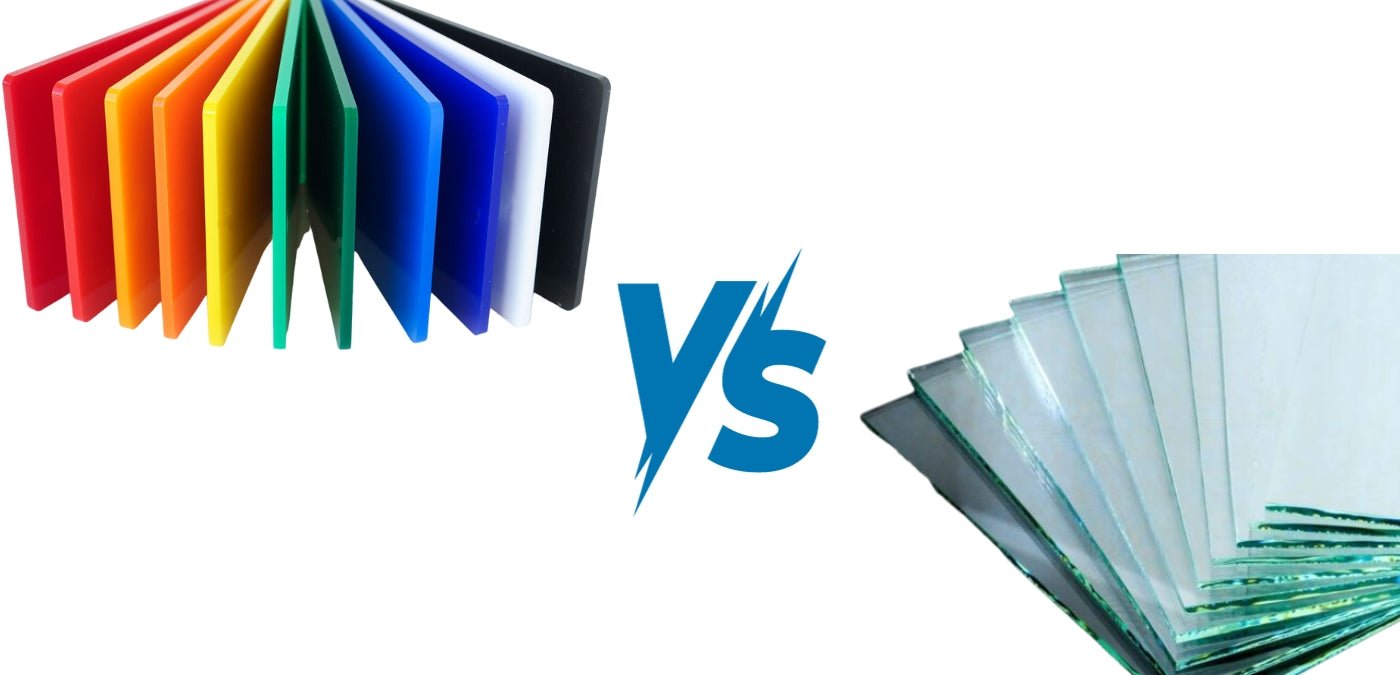

🌱 Polycarbonate vs Glass: Environmental Impact Compared (Which Is Greener?)
Introduction
When choosing materials for roofing, skylights, pergolas, or cladding and façade system, two of the most common options are polycarbonate sheets and glass.
But beyond strength and appearance, many architects, builders, and homeowners now ask a key question:
👉 Which material is better for the environment?
The answer is not as simple as “glass is natural” or “polycarbonate is plastic.” Both materials have different environmental impacts across production, transport, energy efficiency, and end-of-life recycling.
In this article, we break down the full comparison in a clear and practical way.

🧱 1. What is Polycarbonate?
Polycarbonate is a high-performance thermoplastic material known for:
- High impact resistance (250 times stronger than glass)
- Lightweight structure
- UV-resistant coatings
- Excellent thermal insulation properties
It is widely used in:
- Skylights
- Pergolas
- Roofing systems
- Safety glazing
-
Architectural façades

🪟 2. What is Glass?
Glass is made primarily from silica (sand), melted at very high temperatures and formed into rigid sheets.
It is widely used in:
- Windows
- Skylights
- Curtain walls
- Architectural façades
Key characteristics:
- Excellent clarity and aesthetics
- Fully inert and non-toxic
- Recyclable in theory without losing quality
- Heavy and fragile compared to polycarbonate
🌍 3. Environmental Impact: Production Stage
🔥 Glass production
Glass manufacturing requires:
- Very high melting temperatures (~1500°C)
- Significant energy consumption
- Large CO₂ emissions during production
However:
- Raw materials are abundant and natural
- No toxic chemical additives in basic glass
🧪 Polycarbonate production
Polycarbonate is petroleum-based and requires chemical processing.
Environmental considerations:
- Lower melting energy than glass processing in some cases
- Derived from fossil fuels
- More complex chemical production process
However:
- Lightweight nature reduces transport emissions significantly
- Can reduce material usage in structural applications
🚚 4. Transport & Installation Impact
Glass
- Heavy material → higher transport emissions
- Requires stronger structural support
- Higher breakage risk during transport and installation

Polycarbonate
- Much lighter (50% lighter than glass )
- Easier and cheaper to transport
- Easier to cut
- Lower structural load → less supporting steel/aluminium required

👉 In real construction projects, transport + structural savings can significantly reduce total carbon footprint for polycarbonate systems.
🌡️ 5. Energy Efficiency in Buildings
Glass
- Standard glass has poor insulation
- Double/triple glazing improves performance but increases cost and weight
Polycarbonate
- Multiwall polycarbonate provides strong thermal insulation
- Helps reduce heat loss in winter and heat gain in summer
- Can reduce energy consumption in skylight and roofing applications
👉 In many roofing and skylight applications, polycarbonate can outperform standard glass in thermal efficiency.

⚖️ Direct Comparison Table
| Feature | Glass (Double Glazed) | Polycarbonate (Multiwall) |
|---|---|---|
| U-value | 1.0 – 3.0 | 1.5 – 3.0 |
| Weight | Heavy | Very light |
| Heat retention | Good | Good to very good |
| Cost | High | Lower |
| Structural load | High | Low |
| Impact resistance | Low | Very high |
♻️ 6. Recyclability & End-of-Life
Glass
- 100% recyclable
- Can be recycled repeatedly without losing quality
- Recycling infrastructure is widely available
Polycarbonate
- Technically recyclable
- Recycling infrastructure is more limited
- Some grades can be reprocessed into industrial products
👉 Glass has an advantage in traditional recycling systems, while polycarbonate recycling depends on local facilities.
🛠️ 7. Durability & Lifecycle Impact
Glass
- Long lifespan
- Can crack or shatter under impact
- Replacement often required after damage
- Spontaneous glass breakage in tempered glass typically occurs at a rate of roughly 0.3% to 3%
Polycarbonate
- Extremely impact resistant (virtually unbreakable in many applications)
- Long service life when UV-protected (10-25 years)
- Less frequent replacement reduces long-term environmental impact
👉 A longer lifespan can offset some of the environmental costs of production.
⚖️ 8. Overall Environmental Comparison
| Factor | Glass | Polycarbonate |
|---|---|---|
| Production energy | High | Medium |
| CO₂ emissions | High | Medium |
| Transport impact | High | Low |
| Thermal insulation | Medium | High |
| Recyclability | Excellent | Moderate |
| Durability | High but fragile | Very high impact resistance |
🧠 9. So Which One Is More Eco-Friendly?
There is no absolute winner — it depends on application:
🌿 Polycarbonate is more environmentally efficient when:
- Lightweight structure is important
- Transport emissions matter
- Thermal insulation is required
- Impact resistance is critical (roofing, pergolas, skylights)
🌿 Glass is more environmentally efficient when:
- Long-term recyclability is the priority
- Optical clarity is essential
- Structural load is not an issue
- Permanent architectural façades are used
🏗️ 10. Best Use Cases in Construction
Polycarbonate is best for:
- Pergola roofing
- Skylights
- Covered walkways
- Stadium roofing
- Safety glazing
Glass is best for:
- High-end façades
- Architectural windows
- Internal partitions
- Premium visual applications
❓ FAQ
Is polycarbonate more environmentally friendly than glass?
It depends on usage. Polycarbonate can be more efficient in transport, insulation, and durability, while glass performs better in recyclability.
Does polycarbonate reduce energy consumption?
Yes, especially multiwall systems, which provide strong thermal insulation in roofing, greenhouse and skylight applications.
The multi-wall design of arcoPlus® provides a clear advantage in thermal insulation. According to DIN 4701 calculations, an industrial building with multiwall polycarbonate glazing consumes significantly less fuel than the same building fitted with glass windows.
Can polycarbonate be recycled?
Yes, but recycling availability depends on local facilities and material grade.

Does glass have a lower carbon footprint?
Not always. While glass is recyclable, its production is energy-intensive and heavy transport increases emissions.

🧾 Conclusion
Both polycarbonate and glass have environmental strengths and weaknesses.
- Glass excels in recyclability and natural material perception
- Polycarbonate excels in weight reduction, energy efficiency, and durability
👉 The most sustainable choice depends on how and where the material is used, not just the material itself.
You may also interested in
What is perspex? And the difference between Polycarbonate and Acrylic